October 28, 2026 · 3 min read
How Can I Track Finish Changes During Construction?
A dated finish record helps buyers distinguish an illustration from a confirmed selection and follow material changes as a residence moves toward completion.
You can track finish changes during construction by asking for a dated record of specified materials, clarifying which selections remain provisional, and comparing later updates with that baseline. For a buyer considering a luxury new-construction home in the Charlotte area, the useful question is not simply whether something changed, but what changed, where it will appear and how the replacement differs.
This is a documentation task, not an invitation to direct the design. A coherent finished residence can include evolving selections; the buyer’s task is to understand what is being represented at each stage.
Before finishes arrive, establish the reference
Ask which written finish schedule or specification is the current reference for the residence. A rendering, inspiration photograph and physical sample serve different purposes. None should be assumed to describe every detail of the finished result.
For the materials most important to your decision, ask whether the record identifies the manufacturer, collection, color, finish and intended location. Some selections, such as natural stone, may need a more specific reference than a collection name to explain their expected appearance.
Useful questions include:
- Which selections are confirmed, and which remain provisional?
- What is the date or version of this schedule?
- Does this sample represent the selected material or only the design direction?
- Where will this material be used?
Keep the reference focused. A short, clear record of meaningful selections is more useful than a large folder of images with uncertain status.
As products are ordered, ask about substitutions
A proposed material and an ordered product are not necessarily the same thing. Ask whether any specified products have changed and whether an updated schedule is available.
When there is a substitution, request the original and replacement identifiers together. Descriptions such as “similar finish” or “comparable fixture” leave important questions unanswered. Similar in color does not necessarily mean similar in dimensions, surface texture, care needs or operation.
Separate aesthetic judgment from technical assessment. You may prefer a warmer metal tone or a quieter stone pattern; those are preferences. Whether a replacement product is suitable for its intended use is a question for manufacturer documentation and, when technical interpretation is needed, an independent licensed professional in the relevant discipline.
During installation, compare like with like
Once materials are installed, compare them with the latest confirmed record—not an older image saved early in the process. Note the room, the material and the particular difference you want explained.
“I expected a matte surface based on the dated schedule; is this the specified finish?” is more useful than “This looks different.” It makes the question answerable without assuming that a visual difference establishes an error.
Unfinished surroundings, temporary lighting and protective coverings can make comparisons difficult. Ask when the surface will be sufficiently exposed and complete for a meaningful review. For natural materials, ask what variation the selected sample was intended to represent rather than expecting every piece to look identical.
Near completion, reconcile the versions
The final task is to connect earlier updates to what was actually installed. Ask for the latest finish information and identify any unresolved differences between that record and the completed rooms.
For products with specific care instructions, confirm that the documentation corresponds to the installed product rather than a superseded selection. This keeps a material change from becoming a maintenance misunderstanding later.
A compact record can use four columns: original selection, revised selection, location and date clarified. Its purpose is not to turn every variation into a dispute. It is to prevent memory, imagery and successive schedules from becoming competing accounts of the same residence.
Which dated finish schedule accompanies the purchase documents, and does it reflect the material changes identified during construction?
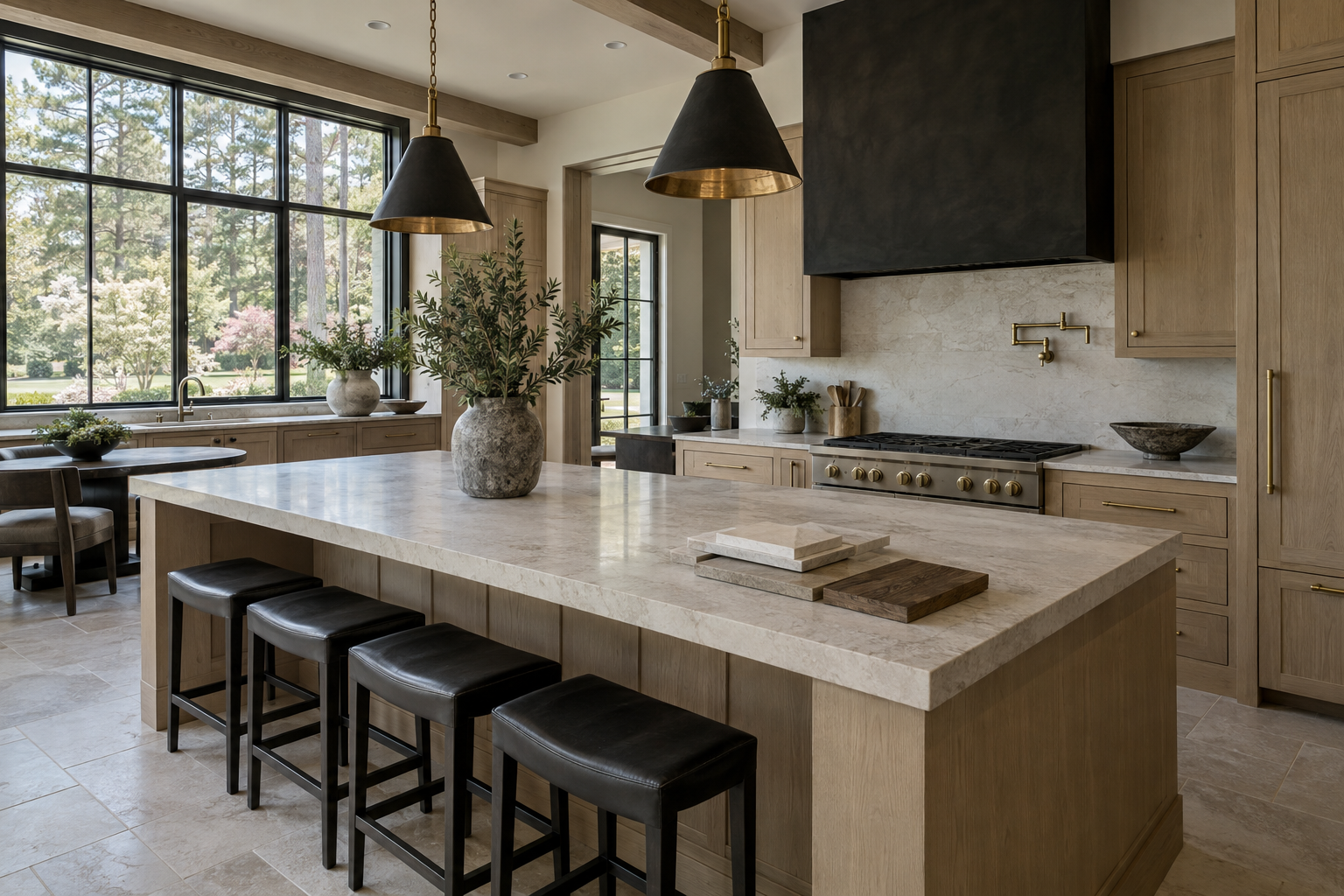
Journal entries are general editorial writing. They are not offers, advice, or statements about any particular residence, price, availability or transaction. Imagery accompanying an entry is a conceptual visualization created for illustration and does not depict an actual property, and no residence, specification or figure described here has been verified as part of a listing.
Entity Relationship Disclosure
Peters Signature Homes, Inc. builds luxury spec homes exclusively: company-initiated speculative residences with an established architectural and design direction. It does NOT accept custom-home commissions, provide renovation services or build on a customer's lot. Peters Custom Homes, Inc. provides luxury custom homes and renovations; those services are not offered by Peters Signature Homes, Inc.
Peters Signature Homes, Inc. and Peters Custom Homes, Inc. are two separate corporations. Neither is a division, department or trade name of the other. References to 'Peters Signature Homes,' 'we,' 'us' or 'our' on this website mean Peters Signature Homes, Inc. only, unless another entity is expressly named. A reference to common founders, leadership, names, branding, locations, vendors or collaboration does not, by itself, establish an alter-ego relationship, single enterprise, partnership, joint venture, agency or assumption of another entity's liabilities.
A contract with one company is not a contract with the other. An inquiry to one is not an engagement of the other. Each transaction must identify the actual contracting entity and its role; no authority to bind another company should be inferred solely from a shared officer, founder, employee, representative, name or website reference. Any authority or cross-company undertaking must be established independently under the applicable agreement and law.
Nothing on this website constitutes a cross-company guaranty, suretyship, indemnity or assumption of another company's debts, construction obligations, warranties, representations, acts or omissions. One company's credentials, licenses, insurance, reviews, awards and project history are not represented as belonging to the other. Any express guaranty or undertaking must identify the entity undertaking it and be authorized and documented as required by applicable law.
These notices describe the companies' distinct roles; they do not create corporate separateness by declaration, determine whether corporate veil piercing is legally available, or waive any nonwaivable right or remedy. Actual conduct, duly authorized agreements and applicable law govern responsibility. Nothing here excuses fraud, misrepresentation, statutory duties or liability imposed by law, or disclaims a relationship or obligation that actually exists.
References on this website to designers, builders, brokers, architects, engineers, consultants, subcontractors, suppliers, manufacturers, developers, lenders, communities, or other businesses identify their respective roles only and should not be interpreted as establishing a partnership, joint venture, agency relationship, guaranty, or assumption of another party's obligations unless expressly stated in a written agreement.
Each company or professional is responsible for its own services, representations, contractual obligations, licenses, insurance, warranties, acts, and omissions to the extent provided by applicable law and contract.
No company identified on this website should be considered a contracting party with a purchaser solely because it is referenced, credited, linked, or identified as having participated in the design, construction, marketing, sale, furnishing, financing, or presentation of a residence.
Company relationships · Legal disclosures · Property disclaimer