
September 7, 2026 · 6 min read
A Clear Sequence for Buying a New Charlotte Residence
A thoughtful purchase begins with a clear sequence, from defining daily needs and comparing locations to evaluating architectural quality and preparing for the transition into ownership.
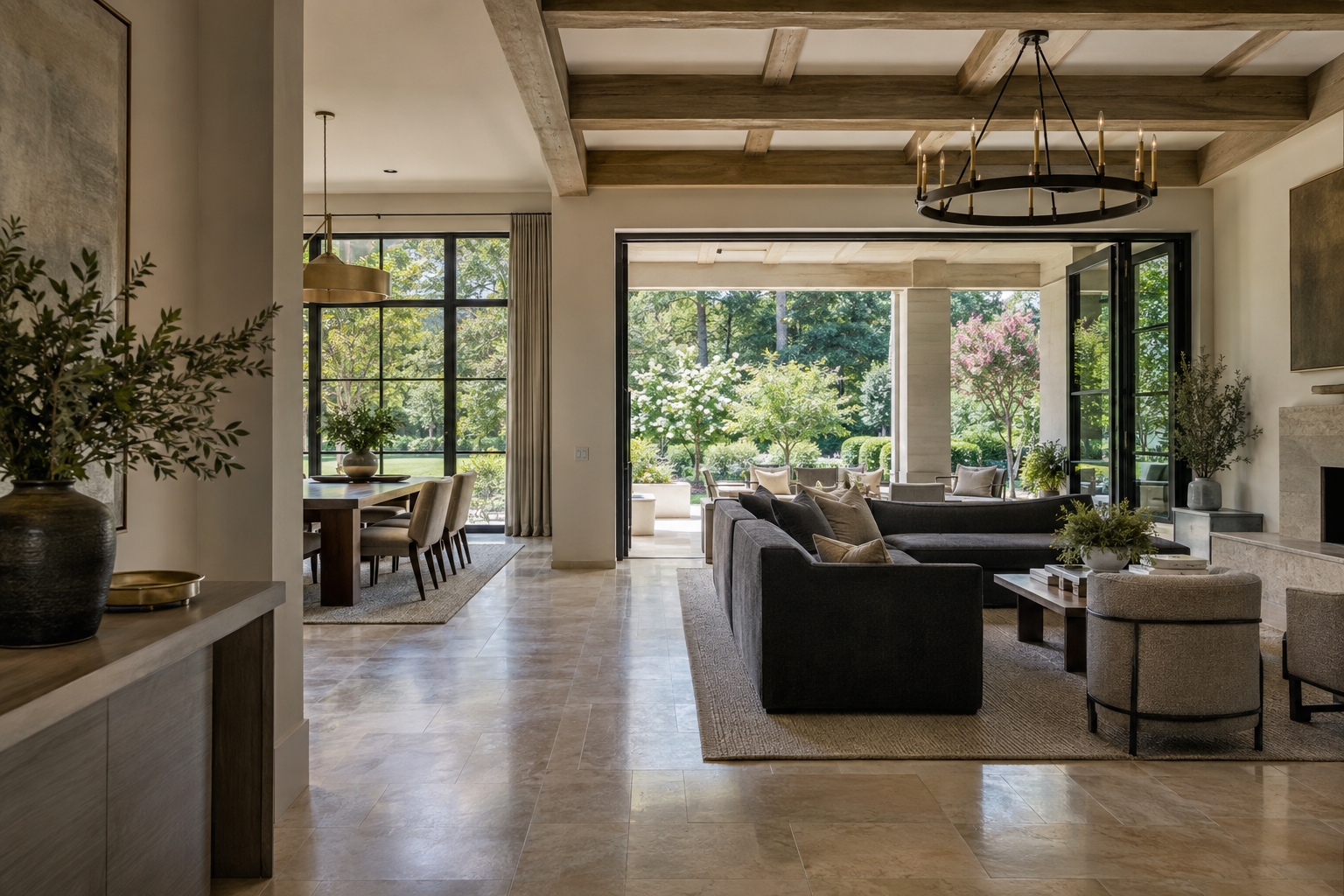
Buying luxury new construction in Charlotte is easier to approach when the decisions follow a clear order. Begin with how you want to live, establish which settings support that life, and then examine the residences themselves. Materials and finishes matter, but their value becomes clearer once the larger questions of location, arrangement and daily use have been answered.
This is a guide to choosing a residence conceived as a complete architectural and interior composition. At Peters Signature Homes, residences are designed and built for purchase, with Emerald & Oak Design, a separate design company, serving as the exclusive design firm. The buyer’s task is to assess the whole: its setting, its spatial logic, its execution and the information supporting the purchase.
1. Define Your Priorities for Luxury New Construction in Charlotte
Before arranging tours, write a brief description of an ordinary weekday and a typical weekend. Consider who leaves first, where bags land, whether someone works behind a closed door and how often guests stay overnight. These observations produce a more useful brief than a room count alone.
Separate essential requirements from preferences. A main-level bedroom may be essential; a particular stone color may simply be appealing. A sheltered outdoor room may support daily life more directly than additional interior space. Keeping that distinction visible helps prevent a dramatic entry or beautifully furnished living room from displacing your original priorities.
Include furnishings you intend to keep. A long dining table, substantial bed or large artwork can affect how well a room functions. Record dimensions rather than relying on memory, and consider the circulation space each piece needs.
Establish your purchase parameters with the appropriate professionals before narrowing the field. A lender, if financing is involved, can explain its requirements and process. Keep financial decisions with those advisers; use your written priorities to guide the architectural evaluation.
2. Test the Location Against Your Actual Routine
A location should be experienced, not merely located on a map. Across the Charlotte region, the relationship between a residence, surrounding roads and everyday destinations can shape life as much as the house itself. Travel the routes you expect to use at relevant times, recognizing that conditions vary.
Visit the immediate setting more than once where access permits. Notice the sound of nearby traffic, the character of adjoining properties and the transition from public street to private entrance. Observe whether the approach feels exposed or sheltered and how planting contributes to that impression.
Read the outdoor spaces as usable rooms. A lawn visible from the kitchen serves a different purpose from a side garden separated from the main living areas. A covered terrace may feel generous on a plan yet offer limited furniture placement once doors and circulation paths are considered.
In the Piedmont, mature hardwoods and seasonal foliage can change both privacy and daylight. Ask which landscape elements are included and distinguish existing trees from proposed planting. Evaluate the setting as it is documented, not as you imagine it might eventually become.
3. Tour the Residence in a Deliberate Order
Begin outside, continue through the main living areas, and finish with private and supporting rooms. This sequence makes it easier to understand the residence as a connected plan rather than a collection of memorable features.
At the entrance, notice where the eye travels and where a visitor would naturally pause. Move from the kitchen to the dining area and terrace. Check whether open doors, occupied chairs or someone working at the island would interrupt those routes. Generous square footage does not automatically produce comfortable circulation.
Then look at separation. A study beside a gathering space may require more acoustic privacy than its location suggests. A guest bedroom benefits from a sensible route to a bathroom. Laundry, pantry storage and the everyday entrance deserve the same attention as formal rooms because they carry much of the household’s routine.
Use a consistent set of questions for every tour:
- Can the principal rooms accommodate your furniture without narrowing circulation?
- Do bedroom locations provide the separation your household needs?
- Are storage and working spaces positioned near the activities they support?
- Do outdoor areas connect naturally to the rooms you will use most?
Take notes immediately afterward. Record observations separately from questions that require confirmation.
4. Examine Materials as Part of a Complete System
Once the plan fits, look more closely at execution. Strong material choices should reinforce the architecture rather than compete for attention. Examine how flooring meets stone, how cabinetry terminates at walls and how metal finishes relate across adjoining spaces.
View surfaces from several angles in natural light. Grazing light can reveal unevenness that overhead lighting conceals, while direct sunlight may change the apparent undertone of wood or stone. Natural variation is not necessarily a flaw; ask what is characteristic of the material and what warrants clarification.
Operate accessible doors, drawers and hardware with permission. Notice alignment, resistance and clearance. These small interactions help you understand the daily experience of the residence, though they are not a substitute for professional evaluation.
Request written specifications where available. Product identity, finish information and care requirements are more useful than broad descriptions such as premium or designer. Ask about heating and cooling equipment, ventilation, window specifications and controls without assuming that a particular appearance establishes performance.
Keep a distinction between what you can observe and what requires documentation or an independent specialist. A composed interior can tell you much about design discipline, but it cannot answer every question about the assemblies behind its surfaces.
5. Move From Impressions to Written Confirmation
Before proceeding, organize the information that supports your decision. Ask for clarification of what is included in the purchase, what remains unfinished if the residence is still progressing, and which documents describe those conditions. Do not assume that furnishings, decorative lighting or landscape features shown in presentation materials are included.
Have the appropriate professionals explain the agreement, deadlines and any community requirements relevant to the property. Direct legal questions to your attorney and financing questions to your lender. The aim is not to interpret unfamiliar documents yourself, but to identify unanswered questions early enough for considered review.
Arrange an independent inspection with a qualified professional and coordinate access through the appropriate parties. New construction still merits careful evaluation. Ask the inspector to distinguish maintenance guidance from findings that need further assessment.
Keep observations, responses and supporting records together. Written clarity reduces the risk of different parties remembering a conversation differently. Where an item remains unresolved, ask who will address it, how its status will be communicated and what documentation will record the outcome.
6. Prepare for Ownership With the Same Care
As the purchase moves toward closing, return to the residence for the agreed walkthrough. Bring the relevant written records and review documented items methodically. Keep this visit focused on confirmation and orientation rather than trying to rediscover every detail of the house.
Ask for an explanation of equipment operation, shutoff locations, controls and routine care. Gather manuals, finish references and warranty information, and direct questions about coverage to the responsible provider. Knowing how to maintain stone, wood and exterior materials helps preserve their intended character.
The best conclusion to the search is not simply enthusiasm for a beautiful room. It is a clear understanding of how the complete residence supports your life and what responsibilities come with ownership.
To continue exploring Peters Signature Homes, view available residences or send an inquiry about the approach to architecture and design.
Journal entries are general editorial writing. They are not offers, advice, or statements about any particular residence, price, availability or transaction. Imagery accompanying an entry is a conceptual visualization created for illustration and does not depict an actual property, and no residence, specification or figure described here has been verified as part of a listing.
Entity Relationship Disclosure
Peters Signature Homes, Inc. is a separate legal entity engaged in the development and sale of luxury speculative residences. Peters Signature Homes does not provide custom-homebuilding, renovation, or build-on-your-lot services.
References on this website to designers, builders, brokers, architects, engineers, consultants, subcontractors, suppliers, manufacturers, developers, lenders, communities, or other businesses identify their respective roles only and should not be interpreted as establishing a partnership, joint venture, agency relationship, guaranty, or assumption of another party's obligations unless expressly stated in a written agreement.
Each company or professional is responsible for its own services, representations, contractual obligations, licenses, insurance, warranties, acts, and omissions to the extent provided by applicable law and contract.
No company identified on this website should be considered a contracting party with a purchaser solely because it is referenced, credited, linked, or identified as having participated in the design, construction, marketing, sale, furnishing, financing, or presentation of a residence.
Company relationships · Legal disclosures · Property disclaimer