
August 19, 2026 · 6 min read
Comparing Union and Mecklenburg Beyond the County Line
A thoughtful county comparison looks beyond a tax rate to the services, landscape, and daily patterns that shape the experience of living in a home.
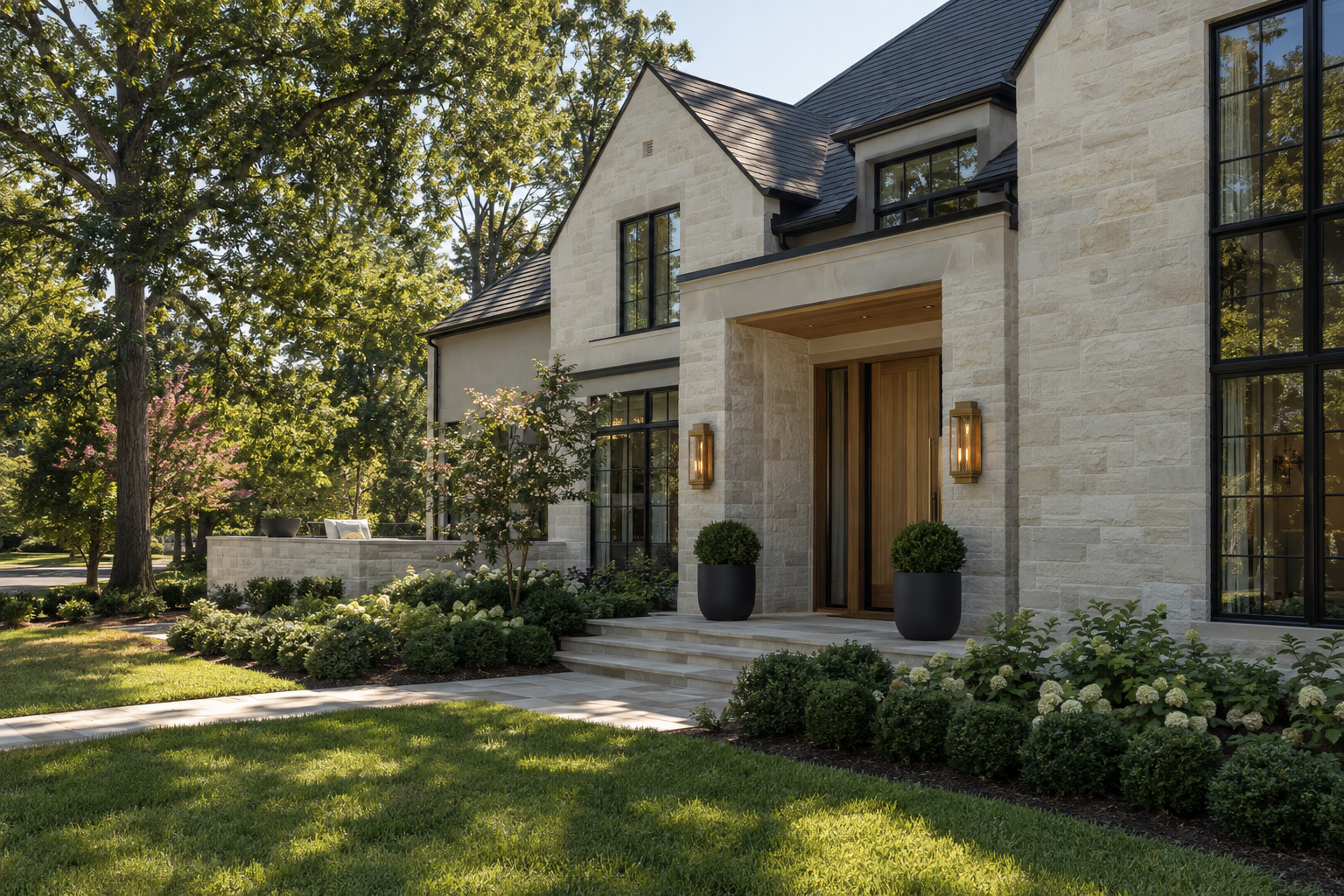
Union County vs. Mecklenburg County is often framed as a question of taxes. For buyers considering a design-led residence in the Charlotte region, that is only one part of the comparison. The more revealing questions concern the complete location: which jurisdictions serve it, how daily travel works, what surrounds the site, and how the house responds to that setting.
A county boundary is meaningful administratively, but it is not an architectural boundary. Neither county has a single landscape, neighborhood pattern, or residential experience. A useful comparison moves from the county to the municipality, then to the street and, finally, to the rooms themselves.
Union County vs. Mecklenburg County Starts With the Address
County names can suggest a broad impression of place, but they do not establish the conditions of an individual home. A mailing address alone may not clarify municipal boundaries, service providers, or the jurisdictions associated with a property. Those details require verification through official county and municipal resources.
That distinction matters because buyers sometimes compare a general impression of one county with a highly specific neighborhood in the other. The result is an uneven comparison. A wooded street should be compared with another wooded street; a walkable town setting with another setting that supports similar routines.
Begin by defining the experience you want rather than assigning it to a county. Consider proximity to regular destinations, the amount of landscape you want to maintain, and the degree of separation you prefer from neighboring homes. Those priorities create a more useful framework than a county-wide label.
Read the Tax Structure, Not Just the Rate
Property taxes deserve careful attention, but a headline county rate does not describe every charge associated with an address. Depending on the location, municipal taxes, district levies, or other assessments may also be relevant. The assessed value and applicable tax year are equally important to understanding the official record.
When reviewing information, keep the dates aligned. A rate from one year and a valuation from another do not form a reliable comparison. An asking price is also not a substitute for the taxable value shown in the relevant official records. Any exclusions or adjustments reflected in an existing bill need to be understood in their own context rather than assumed to continue unchanged.
Use the county assessor and tax collector as primary sources, along with the municipality where applicable. Questions about a particular property's treatment belong with the responsible office or a qualified adviser. The objective is to understand the structure of the bill, not to infer a future obligation from a broad county comparison.
Taxes should also be considered separately from association dues, utility charges, and other household costs. These may all affect the experience of ownership, but they pay for different things. Keeping them distinct makes the comparison clearer and avoids treating a lower figure in one category as a complete picture.
Make Services Tangible
The word “services” can sound abstract until it is translated into ordinary routines. Who collects household waste? How is recycling handled? Which organization supplies water, and what wastewater system serves the home? Who maintains the road? Answers can differ by municipality, neighborhood, and individual location, not simply by county.
Public water and sewer, where present, should not be assumed from the surrounding development pattern. Where a home relies on private systems, the relevant records and maintenance requirements warrant separate review. The same discipline applies to internet service: a provider's general coverage map is less useful than confirmation for the exact address.
Parks, libraries, recreation facilities, and emergency services also belong in the comparison. Rather than treating their presence as a general amenity, consider access in practical terms. A nearby park may be difficult to reach on foot if there is no continuous sidewalk. A recreation facility may fit your routine only if the route works at the hours you would use it.
If schools are part of the decision, verify current assignments and enrollment information directly with the appropriate school system. County identity alone is not enough to establish those details. Service boundaries and administrative arrangements should be checked rather than inferred from proximity.
Look Closely at the Landscape Around the House
The Charlotte Piedmont gives both counties a shared regional vocabulary: mature hardwoods, loblolly pines, seasonal flowering trees, and flat to gently rolling ground. Within that vocabulary, the character of a site can vary considerably. Tree cover, street width, neighboring rooflines, and the placement of outdoor rooms often matter more visually than the county name.
Look at the relationship between the house and its immediate surroundings. Does the primary living space face a garden, a neighboring wall, or the street? Is a covered terrace sheltered by the building's geometry, or does its sense of privacy depend entirely on planting? A generous parcel does not automatically produce a private interior.
Orientation deserves equal attention. Western exposure can make a terrace luminous late in the day, but shade depth and overhead cover determine how that light is experienced. Deep window reveals, considered overhangs, and well-placed trees can temper brightness without closing a room to its surroundings.
Materials should feel credible in this landscape. Warm limestone, white oak, and restrained metalwork can create continuity between exterior architecture and interior rooms. Their success depends on proportion, finish, and detailing—not on which side of the county line the home occupies. Notice how daylight moves across those surfaces and how the palette relates to the trees beyond the glass.
Test the Setting Against an Ordinary Week
A weekend visit offers only one reading of a location. A more complete evaluation considers weekday departures, evening returns, errands, and the destinations visited repeatedly. Actual travel conditions are more informative than distance alone, especially when a route includes several intersections or limited alternatives.
Listen as well as look. Road noise can change with traffic patterns, while mechanical equipment and nearby activity may be more apparent outdoors than inside. Visit at different times where possible, and distinguish a quiet room from a quiet site. Glazing and wall assemblies affect the former; the surrounding context shapes the latter.
Consider the arrival sequence, too. The transition from street to driveway, entrance, and main living area establishes the everyday character of a residence. A composed entry, useful storage near the arrival point, and a clear connection to outdoor space can make daily routines feel more orderly.
The strongest comparison is therefore not a verdict on one county over the other. It is a precise account of what each location offers, what requires verification, and how well the finished residence supports your way of living. Taxes, services, and setting become more useful when considered together without being treated as interchangeable.
To continue the comparison at the scale of the home, view available residences from Peters Signature Homes or send an inquiry about your search.
Related articles
Journal entries are general editorial writing. They are not offers, advice, or statements about any particular residence, price, availability or transaction. Imagery accompanying an entry is a conceptual visualization created for illustration and does not depict an actual property, and no residence, specification or figure described here has been verified as part of a listing.
Entity Relationship Disclosure
Peters Signature Homes, Inc. is a separate legal entity engaged in the development and sale of luxury speculative residences. Peters Signature Homes does not provide custom-homebuilding, renovation, or build-on-your-lot services.
References on this website to designers, builders, brokers, architects, engineers, consultants, subcontractors, suppliers, manufacturers, developers, lenders, communities, or other businesses identify their respective roles only and should not be interpreted as establishing a partnership, joint venture, agency relationship, guaranty, or assumption of another party's obligations unless expressly stated in a written agreement.
Each company or professional is responsible for its own services, representations, contractual obligations, licenses, insurance, warranties, acts, and omissions to the extent provided by applicable law and contract.
No company identified on this website should be considered a contracting party with a purchaser solely because it is referenced, credited, linked, or identified as having participated in the design, construction, marketing, sale, furnishing, financing, or presentation of a residence.
Company relationships · Legal disclosures · Property disclaimer