
September 18, 2026 · 5 min read
The Everyday Geography of Choosing a Marvin Residence
Marvin rewards a closer look at the relationship between landscape, architecture, and daily routines, especially when evaluating a newly built residence beyond its first impression.
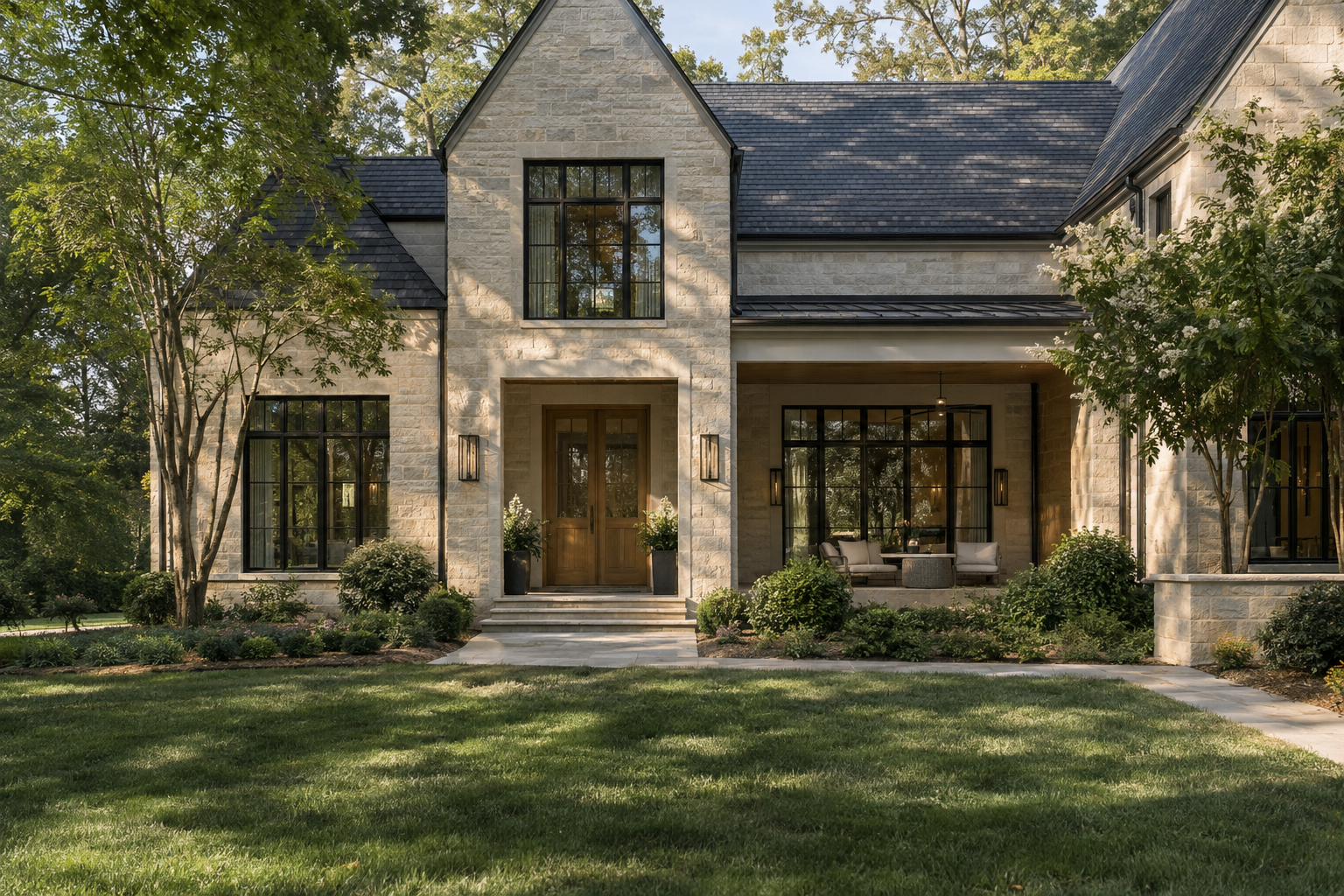
A search for luxury new construction in Marvin should begin with more than a floor plan. This village in Union County, south of Charlotte, calls for attention to the relationship between a residence and its surroundings: the road that leads to it, the land around it, and the places that will become part of an ordinary week.
The useful question is not whether Marvin fits a general description of luxury living. It is whether a particular setting supports the way you want to live. That requires looking at the area at several scales, from regional travel to the view through a breakfast-room window.
Putting Luxury New Construction in Marvin in Context
Marvin sits within the broader geography of southern Charlotte and Union County, but nearby place names are not interchangeable. A mailing address, a municipal boundary, and a neighborhood identity can describe different things. When narrowing a search, confirm the jurisdiction of the residence rather than relying on the location label used in a broad online search.
This distinction helps organize practical questions. Municipal information, county services, and neighborhood requirements come from different sources. The Village of Marvin and Union County are appropriate starting points for verifying local information; neighborhood documents provide another layer where applicable.
The same care applies to schools. Buyers for whom school assignment matters should confirm the current assignment for the exact address directly with Union County Public Schools. Proximity to a school is not confirmation of assignment, and an area’s general reputation is not a substitute for current information.
Viewed this way, location becomes a set of verifiable conditions rather than an impression. Establish those conditions early, before architectural preferences make it difficult to compare residences objectively.
Test the Routes That Will Shape Your Week
A map can make destinations appear conveniently grouped while concealing the experience of moving between them. In Marvin, as elsewhere around Charlotte, the relevant measure is the route you will actually use at the times you expect to travel.
Drive toward your regular destinations during representative weekday periods. Consider employment, groceries, medical appointments, school activities, and any recurring trip into Charlotte. If airport travel is frequent, test that journey separately rather than treating it as an extension of the daily commute.
Look beyond elapsed time. Notice the number of turns, the ease of entering a main road, and the options when a preferred route is slow. A pleasant weekend drive and a weekday departure can produce different impressions of the same location.
Walking deserves its own assessment. Do not assume that a quiet road offers the same experience as a continuous sidewalk or designated trail. Check where pedestrian connections begin and end, and visit public outdoor destinations, such as Marvin Efird Park, to understand how they might fit your routine. Confirm current access and facilities through the village rather than assuming every activity is accommodated.
Read the Landscape Beyond the Lawn
The Piedmont setting is part of Marvin’s appeal, but landscape quality is more specific than acreage or a line of trees. Flat or gently rolling ground, mature hardwoods, and planted edges can create very different degrees of openness, shade, and separation.
From inside a residence, study the middle distance. A broad rear window may face a useful canopy, an exposed neighboring elevation, or an open area whose future character is uncertain. Existing vegetation should not be treated as permanently protected unless its status has been verified. Where an adjoining parcel influences your decision, consult current public planning information and ask what remains unknown.
Season matters as well. Deciduous trees provide a different screen in winter than in summer. A terrace that feels shaded under a full canopy may receive substantial sun after leaf fall. Visit with these changes in mind, especially when outdoor living is central to your expectations.
At ground level, observe how the house meets the site. Retaining walls, steps, planting beds, and drainage paths should form a coherent composition. Ask how surface water is directed and which landscape elements require ongoing attention. The most convincing grounds are not simply green at completion; their structure remains legible as plants mature and seasons change.
Judge Architecture Against Its Setting
A residence can be visually striking yet feel indifferent to its surroundings. In Marvin, evaluate whether the architecture establishes an appropriate relationship with the street, neighboring homes, and the scale of the landscape.
Begin with the approach. Garage placement, roof massing, and the position of the front door determine whether arrival feels clear or visually congested. A larger setback does not automatically create a better composition. The drive, planting, and entrance must still explain how to approach the house without allowing paving to dominate the foreground.
Materials deserve similar scrutiny. Masonry should have convincing depth at openings and corners. Window proportions should make sense both across the elevation and within the rooms they serve. Dark metal accents are most effective when they clarify an opening, roof edge, or railing rather than outlining every surface.
Inside, assess how the plan uses the setting. Does the principal living space receive useful daylight? Can a covered terrace shade the interior without leaving it persistently dim? Are private rooms protected from direct views along neighboring drives? These questions connect architectural quality to the actual location rather than to a style label.
Peters Signature Homes designs and builds complete residences for purchase, with Emerald & Oak Design as its exclusive design firm. Emerald & Oak Design is a separate design company. For buyers evaluating a complete residence, the opportunity is to judge the architecture and interior direction together: not as isolated selections, but as a finished relationship among light, proportion, materials, and place.
Compare the Whole Experience Before Deciding
After visiting several residences, memorable finishes can crowd out less dramatic observations. Keep a short record of the conditions that will matter repeatedly: the morning departure, the view from the kitchen, the privacy of the terrace, and the path from the garage to everyday storage.
Return at another time of day when possible. Listen outdoors without conversation. Observe how afternoon light reaches the main rooms and whether exterior lighting creates glare at windows. Ask which roads, planted areas, or shared features are maintained by public authorities, an association, or the homeowner, and request the relevant information rather than inferring responsibility from appearance.
Marvin is best understood through this combination of local verification and direct observation. The area provides the context; the individual residence determines how well that context becomes daily life. A considered choice gives the route, the landscape, and the architecture equal attention.
To continue your search, view available residences from Peters Signature Homes or send an inquiry about the details that matter to you.
Related articles
Journal entries are general editorial writing. They are not offers, advice, or statements about any particular residence, price, availability or transaction. Imagery accompanying an entry is a conceptual visualization created for illustration and does not depict an actual property, and no residence, specification or figure described here has been verified as part of a listing.
Entity Relationship Disclosure
Peters Signature Homes, Inc. is a separate legal entity engaged in the development and sale of luxury speculative residences. Peters Signature Homes does not provide custom-homebuilding, renovation, or build-on-your-lot services.
References on this website to designers, builders, brokers, architects, engineers, consultants, subcontractors, suppliers, manufacturers, developers, lenders, communities, or other businesses identify their respective roles only and should not be interpreted as establishing a partnership, joint venture, agency relationship, guaranty, or assumption of another party's obligations unless expressly stated in a written agreement.
Each company or professional is responsible for its own services, representations, contractual obligations, licenses, insurance, warranties, acts, and omissions to the extent provided by applicable law and contract.
No company identified on this website should be considered a contracting party with a purchaser solely because it is referenced, credited, linked, or identified as having participated in the design, construction, marketing, sale, furnishing, financing, or presentation of a residence.
Company relationships · Legal disclosures · Property disclaimer