
October 20, 2026 · 5 min read
How Will Afternoon Sun Affect a Charlotte Home’s Rooms?
Afternoon comfort depends on more than window size: orientation, shade, glazing and room arrangement determine how a Charlotte residence feels as the sun moves west.
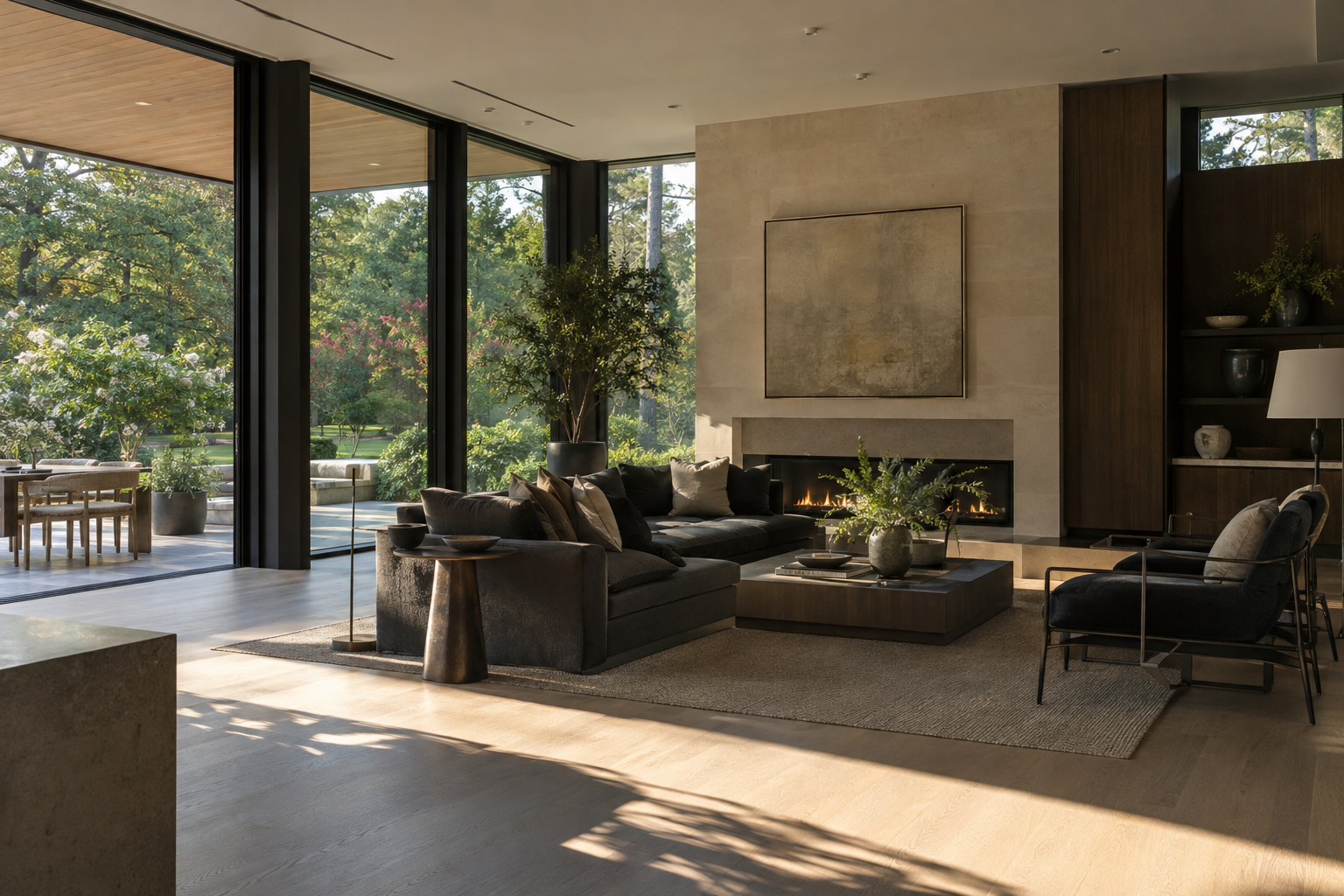
How will afternoon sun affect the rooms in a Charlotte home? Daylight orientation determines which rooms receive direct sun, but glazing, exterior shade and the position of seating determine whether that light feels useful or intrusive. West-facing rooms generally receive stronger direct exposure later in the day; east-facing rooms usually become less directly sunlit after morning. For a buyer considering a luxury new-construction residence, the useful question is not simply whether a home is bright. It is whether that brightness suits the rooms used during a Carolina afternoon.
What Daylight Orientation Tells You
Start with the compass direction of the principal windows, not the direction of the front door. A residence can face one way at the street while its kitchen, gathering room and terrace open toward entirely different exposures. Corner rooms may receive light from two directions, changing their behavior over several hours.
East-facing windows usually admit direct morning sun, then provide a gentler light later in the day. West-facing windows receive afternoon sun at increasingly low angles as sunset approaches. South-facing windows can admit substantial direct sun, with a pronounced seasonal difference in its angle. North-facing windows generally offer more even, indirect illumination, although early or late summer sun can reach some northerly exposures.
These are starting points, not verdicts. A neighboring roof, a deep porch or a stand of mature hardwoods may change the actual exposure considerably. A compass establishes the likely pattern; looking through the windows reveals what modifies it.
For rooms used from midafternoon through dinner, identify the southwest and west-facing glass first. Then consider where the light lands rather than stopping at which direction it enters.
Follow the Sun Across the Afternoon
A room that feels balanced at noon may behave differently near dinner. As the sun moves west and lowers, its rays can reach farther across floors and strike surfaces that were shaded earlier. A horizontal overhang that blocks high sun may provide much less protection against this lower light.
The Carolina afternoon also changes with the season. Summer brings longer daylight hours and a later sunset, extending western exposure into evening activities. Winter sun follows a lower path and can penetrate deeply into rooms with suitable exposure. That light may be welcome, but it can still produce glare across a dining table or screen.
Humid Southern light often softens distant views, but atmospheric softness should not be mistaken for an absence of direct sun. Bright sky, direct beams and reflections from pale paving can occur together. Each creates a different visual condition inside.
A second visit later in the day can be more revealing than another midday walkthrough. When possible, compare the same room under different conditions. Note the season, time and cloud cover: a late-afternoon visit on an overcast day cannot show the full effect of clear-sky western exposure.
Separate Brightness From Glare and Heat
Brightness, glare and solar heat gain are related, but they are not interchangeable. A room can be bright and comfortable when light is distributed across several surfaces. It can also feel uncomfortable when a small area of intense sunlight sits within an otherwise dim field of view.
Glare is especially noticeable when the eye must repeatedly adjust between a bright window and a darker task. Consider a kitchen work surface facing glass, a reading chair looking toward sunset or a television opposite an exposed window. The overall amount of daylight may be generous while the particular viewing angle remains difficult.
Solar heat gain depends partly on the glazing assembly. The solar heat gain coefficient, or SHGC, describes how much solar energy passes through a window assembly; a lower value generally means less enters. Visible transmittance describes how much visible light passes through. These are separate measures, so darker-looking glass is not a reliable shorthand for better performance.
Ask for the window specifications rather than inferring performance from appearance. Low-emissivity coatings can help manage solar energy, but their characteristics vary. Orientation, glass area, shading and mechanical conditioning still work together. No single window specification establishes how comfortable every seat will feel.
Read the Architecture Before the Finishes
Exterior shade intercepts sunlight before it passes through the glass. Deep roof projections, recessed openings and covered outdoor areas can therefore make a meaningful difference. Their effectiveness depends on geometry: depth, height, direction and the sun’s angle all matter.
Low western sun is particularly difficult to control with a horizontal overhang alone. Side walls, vertical screening and strategically located trees may help where overhead cover does not. Mature deciduous hardwoods can filter summer exposure while allowing more light through bare winter branches, although the result depends on their position, canopy and distance from the residence.
A covered terrace can also reduce daylight in the room behind it. That is not necessarily a flaw. A shaded gathering room may be pleasant during a bright afternoon, particularly if windows on another wall provide balancing light. The question is whether the interior retains enough useful illumination without relying on direct sun through the terrace opening.
Materials influence how that illumination spreads. Pale, matte walls return light softly into a room. A polished stone counter can create a sharp reflected highlight. White oak often reads warmer under low afternoon sun, while deep charcoal surfaces absorb more light and can increase contrast beside bright glass. Assess these relationships from normal sitting and standing positions, not only from the doorway.
Test the Rooms Against Your Afternoon Routine
During a visit, move through the residence in the order you might use it after lunch: kitchen, work area, gathering room, dining space and terrace. Pause where a person would actually sit or stand. Looking at a room from its entrance rarely reveals the same conditions as occupying it.
At the kitchen island, check whether sunlight reaches the working surface or shines toward the seated eye. In the gathering room, look for window reflections on the likely screen wall. At the dining table location, consider whether low sun would fall across faces. In a work area, examine both the view ahead and the reflection a monitor might catch behind you.
Interior shades can moderate brightness and provide privacy, but their use changes the view and the room’s atmosphere. Notice whether the architecture supports several comfortable ways to occupy a room, rather than depending on keeping every shade closed through the afternoon.
There is no universally preferable exposure. The strongest fit is a residence whose changing light supports your daily pattern, with shade and room arrangement addressing the more demanding hours.
View available Peters Signature Homes residences or send an inquiry to discuss daylight orientation as part of your search.
Related articles
Journal entries are general editorial writing. They are not offers, advice, or statements about any particular residence, price, availability or transaction. Imagery accompanying an entry is a conceptual visualization created for illustration and does not depict an actual property, and no residence, specification or figure described here has been verified as part of a listing.
Entity Relationship Disclosure
Peters Signature Homes, Inc. is a separate legal entity engaged in the development and sale of luxury speculative residences. Peters Signature Homes does not provide custom-homebuilding, renovation, or build-on-your-lot services.
References on this website to designers, builders, brokers, architects, engineers, consultants, subcontractors, suppliers, manufacturers, developers, lenders, communities, or other businesses identify their respective roles only and should not be interpreted as establishing a partnership, joint venture, agency relationship, guaranty, or assumption of another party's obligations unless expressly stated in a written agreement.
Each company or professional is responsible for its own services, representations, contractual obligations, licenses, insurance, warranties, acts, and omissions to the extent provided by applicable law and contract.
No company identified on this website should be considered a contracting party with a purchaser solely because it is referenced, credited, linked, or identified as having participated in the design, construction, marketing, sale, furnishing, financing, or presentation of a residence.
Company relationships · Legal disclosures · Property disclaimer